
Collision warning
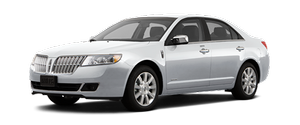
Collision Warning helps prevent common traffic accidents as forward-looking, long-distance radar identifies potential obstacles.
When the danger of a collision is detected, the system warns the driver with an authoritative beep and a simultaneous red warning light projected on the windshield above the instrument panel.
These warnings should be enough to allow the driver to brake before a potential accident. Collision warning also provides emergency brake support which enables harder, quicker deceleration to help drivers stop or reduce speed to lessen the impact of a collision.
See also:
Sync
Your vehicle is equipped with SYNC , a hands-free communications and
entertainment system with special phone and media features. For more
information, please refer to the SYNC supplement or to the ...
What you should know about fail-safe cooling
If the engine coolant supply is depleted, this feature allows the vehicle to
be driven temporarily before incremental component damage is incurred.
The “fail-safe” distance depends on ambient tem ...
Replacing license plate lamp bulbs
1. Make sure the headlamp switch is
in the off position.
2. Remove the two screws from the
license plate lamp assembly.
3. Remove bulb socket by turning
counterclockwise.
4. Carefully pull ...