
Measuring techniques
Your best source of information about actual fuel economy is you, the driver. You must gather information as accurately and consistently as possible. Fuel expense, frequency of fill-ups or fuel gauge readings are NOT accurate as a measure of fuel economy. We do not recommend taking fuel economy measurements during the first 1,000 miles (1,600 km) of driving (engine break-in period). You will get a more accurate measurement after 2,000 miles–3,000 miles (3,000 km–5,000 km).
See also:
Personal safety system™
The Personal Safety System provides an improved overall level of frontal
crash protection to front seat occupants and is designed to help further
reduce the risk of airbag-related injuries. The sy ...
EXTERIOR
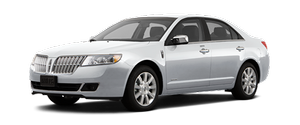
The Lincoln MKZ has status. Redesigned for 2010, it's well-suited for the
country club set. My kids thought it was fancy, which made them feel special and
made me feel like a chauffeur. The tall, ...
3.7L V6 Engine
...