
Starting the engine

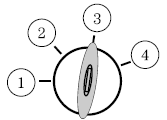
1. Turn the key to 3 (on) without
turning the key to 4 (start). If there
is difficulty in turning the key,
rotate the steering wheel until the
key turns freely. This condition may
occur when:
• the front wheels are turned
• a front wheel is against the curb
2. Turn the key to 4 (start), then release the key as soon as the engine begins cranking. Your vehicle has a computer assisted cranking system that assists in starting the engine. After releasing the key from the 4 (start) position, the engine may continue cranking for up to 10 seconds or until the vehicle starts.
Note: Cranking may be stopped at any time by turning the key to the off position
3. After idling for a few seconds, release the parking brake, apply the brake, shift into gear and drive.
Note: If the engine does not start on the first try, turn the key to the off position, wait 10 seconds and try Step 2 again. If the engine still fails to start, press the accelerator to the floor and try Step 2 again, keeping the accelerator on the floor until the engine begins to accelerate above cranking speeds; this will allow the engine to crank with the fuel shut off in case the engine is flooded with fuel.
See also:
Interior mirror
The interior rearview mirror has two pivot points on the support arm
which lets you adjust the mirror up or down and from side to side.
WARNING: Do not adjust the mirror while the vehicle is in
m ...
Washing the exterior
Wash your vehicle regularly with cool or lukewarm water and a neutral
pH shampoo, such as Motorcraft Detail Wash (ZC-3-A), which is
available from your authorized dealer.
• Never use strong hou ...
How does the safety belt pretensioner and airbag supplementalrestraint system work?
The safety belt pretensioner and
airbag SRS are designed to activate
when the vehicle sustains
longitudinal deceleration sufficient
to cause the sensors to close an
electrical circuit that i ...