
Recreational towing
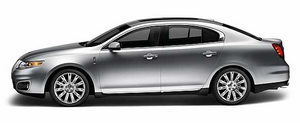
Follow these guidelines if you have a need for recreational (RV) towing.
An example of recreational towing would be towing your vehicle behind a motor home. These guidelines are designed to ensure that your transmission is not damaged.
Note: Put your climate control system in recirculated air mode to prevent exhaust fumes from entering the vehicle. Refer to the Climate Controls chapter for more information.
In case of a roadside emergency with a disabled vehicle, please refer to Wrecker towing in the Roadside Emergencies chapter.
These guidelines are designed to prevent damage to your vehicle after it is hooked-up to the RV or tow dolly.
Front-wheel drive (FWD) vehicles can’t be towed with the front drive wheels on the ground or transmission damage may occur. It is recommended to tow your vehicle with the front drive wheels on a dolly or with all four wheels off the ground on a car-hauling trailer.
All-wheel drive (AWD) vehicles can’t be towed with any wheels on the ground, as vehicle or transmission damage may occur. It is recommended to tow your vehicle with all four wheels off the ground such as when using a car-hauling trailer. Otherwise, no recreational towing is permitted.
See also:
Recommended shift speeds
Upshift according to the following chart:
The instrument cluster will show the
current selected gear you are in.
In order to prevent the engine from
running at too low an RPM, which
may ca ...
Curve control
Curve Control is a dynamic feature designed to help drivers maintain control
if they inadvertently take a curve - such as a freeway off-ramp - too quickly.
Curve Control senses when a vehicle is ent ...
CTA false alerts
Due to the nature of radar technology, there may be certain instances
when the BLIS will alert with no object present when backing up. This
is known as a false alert. Some level of false alerts ar ...