
Recreational towing
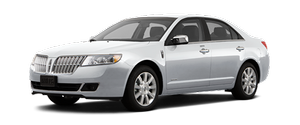
Follow these guidelines for your specific powertrain combination to tow your vehicle for personal travel (such as behind a motor home or a truck).
Note: Put your climate control system in recirculated air mode to prevent exhaust fumes from entering the vehicle. Refer to the Climate Controls chapter for more information.
In case of a roadside emergency with a disabled vehicle, please refer to Wrecker towing in the Roadside Emergencies chapter.
These guidelines are designed to prevent damage to your vehicle after it is hooked-up to the RV or tow dolly.
Front-wheel drive (FWD) vehicles can be towed with all four wheels on the ground or with the front wheels off the ground by using a tow dolly. If you are using a tow dolly follow the instructions specified by the equipment provider. If you are towing with all four wheels on the ground, refer to the towing instructions below.
All-wheel drive (AWD) vehicles can be towed with all four wheels on the ground or with all four wheels off the ground using a vehicle transport trailer. Do not tow your AWD vehicle with the front wheels off the ground (by using a tow dolly) and the rear wheels on the ground; this will cause damage to your AWD system. If you are using a vehicle transport trailer, follow the instruction specified by the equipment provider. If you are towing with all four wheels on the ground, refer to the towing instructions below.
If you tow your vehicle with all four wheels on the ground, follow these instructions:
• Tow only in the forward direction.
• Release the parking brake.
• Place the transmission shift lever in N (Neutral).
• Place the ignition in the accessory position (refer to Starting in the
Driving chapter).
• Do not exceed 65 mph (105 km/h)
• Start the engine and allow it to run for five minutes at the beginning
of each day and at each fuel stop.
See also:
Important safety precautions
WARNING: Do not overfill the fuel tank. The pressure in an
overfilled tank may cause leakage and lead to fuel spray and fire.
WARNING: The fuel system may be under pressure. If you hear
a hissing ...
Reporting safety defects (U.S. only)
If you believe that your vehicle has
a defect which could cause a crash
or could cause injury or death, you
should immediately inform the
National Highway Traffic Safety
Administration (NHTS ...
Power distribution box
The power distribution box is located in the engine compartment. The
power distribution box contains high-current fuses that protect your
vehicle’s main electrical systems from overloads.
WARNING ...