
Steering
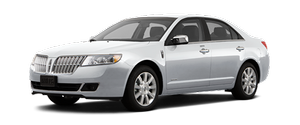
The Lincoln MKS steering system received a thorough makeover for 2013. The gear ratio is quicker (15:1 for 2013 vs. 17.1:1 for today's MKS), making the steering more immediately responsive at all speeds. Additionally, steering boost is now electric rather than hydraulic. The new electric power-assisted steering (EPAS) complements CCD in contributing to the driver-tunable Lincoln Drive Control experience.
Other enhancements contribute to the system's overall improved performance. The steering gear is now solid mounted to the chassis's front subframe. Additionally, a brace has been added under the vehicle (across the transmission tunnel) to strengthen the subframe's mounting points to the chassis.These details help significantly improve the driver's feeling of being connected to the road through the steering wheel. Overall steering response for the 2013 MKS is improved by up to 25 percent.
EPAS offers additional benefits. At lower speeds, for example when parking, EPAS provides additional boost for effortless maneuverability. At higher speeds, EPAS increases steering effort and feedback, giving the driver a more precise steering feel.
EPAS replaces the traditional hydraulic-assist power-steering pump with an electric motor. This helps save fuel because the motor operates only when assistance is required, unlike the hydraulic systems that run continuously. EPAS was standard on 2010-12 MKS models with the 3.5-liter EcoBoost V6, but for 2013, becomes standard on all MKS models.
Software-based technologies, undetectable by the driver, boost the capability of EPAS. Pull-drift compensation detects road conditions such as a crowned surface or crosswinds and adjusts EPAS to compensate. Active nibble control automatically cancels some unwanted steering wheel vibrations at interstate speeds. These actions are designed to give the driver reassurance and maximum control under all driving conditions.
See also:
Fixed code programming
Note: It may be helpful to have another person assist you in
programming the transmitter.
To program units with fixed code
DIP switches, you will need the
garage door hand-held transmitter, ...
Hitches
Do not use a hitch that clamps onto the vehicle’s bumper; use a
load-carrying hitch. You must distribute the load in your trailer so that
10–15% of the total weight of the trailer is on the tongue ...
Dual automatic temperature control (datc) systemwith mytemp
Note: Your climate control system is touch sensitive. You need only
lightly touch the control graphic to activate the feature.
Note: Your vehicle is also equipped with touchscreen climate contr ...