
Blind spot information system (blis ) with cross traffic alert (cta) (if equipped)
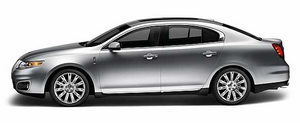
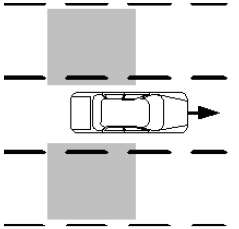
The BLIS is a convenience feature that aids the driver in assessing whether a vehicle is within an area on either side of the vehicle extending rearward from the outside mirrors to approximately 10 feet (three meters) beyond the bumper.
This area is referred to as the blind zone. The BLIS will alert the driver to the presence of motorized vehicles in these areas while driving on roads and freeways.
The system is not designed to prevent contact with other vehicles or objects. The system is designed to provide a warning to assist the driver in detecting vehicles in the blind zones. The system will not detect infrastructure, pedestrians, or cyclists.
WARNING: To help avoid injuries, NEVER use the BLIS as a replacement for using the side and rear view mirrors and looking over your shoulder before changing lanes. It is not a replacement for careful driving and only an assist.
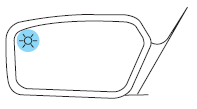
The BLIS has an yellow indicator (also referred to as the alert) located in the left and right exterior mirrors. When the vehicle is started, the system automatically illuminates both indicators for several seconds indicating the system is operating.
The first time you place the transmission in D (Drive) after starting the engine and drive forward at a speed greater than 3 mph (5 km/h) the system becomes active.
Afterwards, the system remains active for all speeds including 0 mph (0 km/h). BLIS is also active if the transmission is placed in N (Neutral). If the transmission is shifted out of D (Drive) or N (Neutral) the system will enter the CTA mode (see CTA operation below). Once shifted back in to D (Drive) the BLIS mode will activate once driven above 3 mph (5 km/h).
The BLIS will trigger the alert for vehicles that enter your blind zone from the rear or merge in to the blind zone from the side. Vehicles that you pass, or a vehicle that enters the blind zone from the front, will trigger the alert only after the vehicle is present in the blind zone for three seconds. Note: For vehicles that pass through the blind zone quickly, typically less than two seconds, the system will not illuminate the alert.
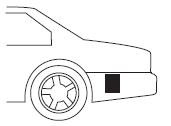
The BLIS consists of two radar sensors each located rearward of the rear wheel hidden behind the bumper fascia. Do not place any type of bumper sticker in this area.
Note: The BLIS typically will not
detect parked vehicles, humans,
animals, or infrastructure (fences,
guard rails, trees, etc.). The BLIS
does not function when the transmission is in R (Reverse) or P (Park).
The BLIS does not provide any additional warning when your turn
signal is activated.
BLIS detection limitations: Due to the nature of radar technology,
there may be certain instances where vehicles entering and exiting the
blind spot zones may not be detected. Below is a list of circumstances
that may cause non-detection:
• Debris build-up on the rear quarter panel fascias
• Certain maneuvering of vehicles entering and exiting the blind zone
• Vehicles passing through the blind zone at very fast rates
• Severe weather conditions
• When several vehicles forming a convoy pass through the blind zone.
See also:
Satellite radio information (if equipped)
Satellite radio channels: SIRIUS broadcasts a variety of music, news,
sports, weather, traffic and entertainment satellite radio channels. For
more information and a complete list of SIRIUS satell ...
Reporting safety defects (Canada only)
If you believe that your vehicle has a defect which could cause a crash or
could cause injury or death, you should immediately inform Transport
Canada, using their toll-free number: 1–800–333–0510 ...
All-wheel drive (awd) system (if equipped)
Your vehicle may be equipped with a full-time all-wheel drive (AWD)
system. The AWD system is an active system, meaning it not only
responds to wheel slip between the front and rear axles but also ...